Online scams are becoming more convincing every day. One common method cybercriminals use is sending fake delivery or customs payment emails using the name of trusted courier companies like DHL. A new DHL phishing email scam is targeting users by pretending to be an official customs payment notice. The fake email claims that a DHL shipment is held at customs and that payment is required to release the parcel.
Recently, a suspicious email was found with the subject:
“Your DHL Shipment is Held at Customs — Payment Needed to Release”
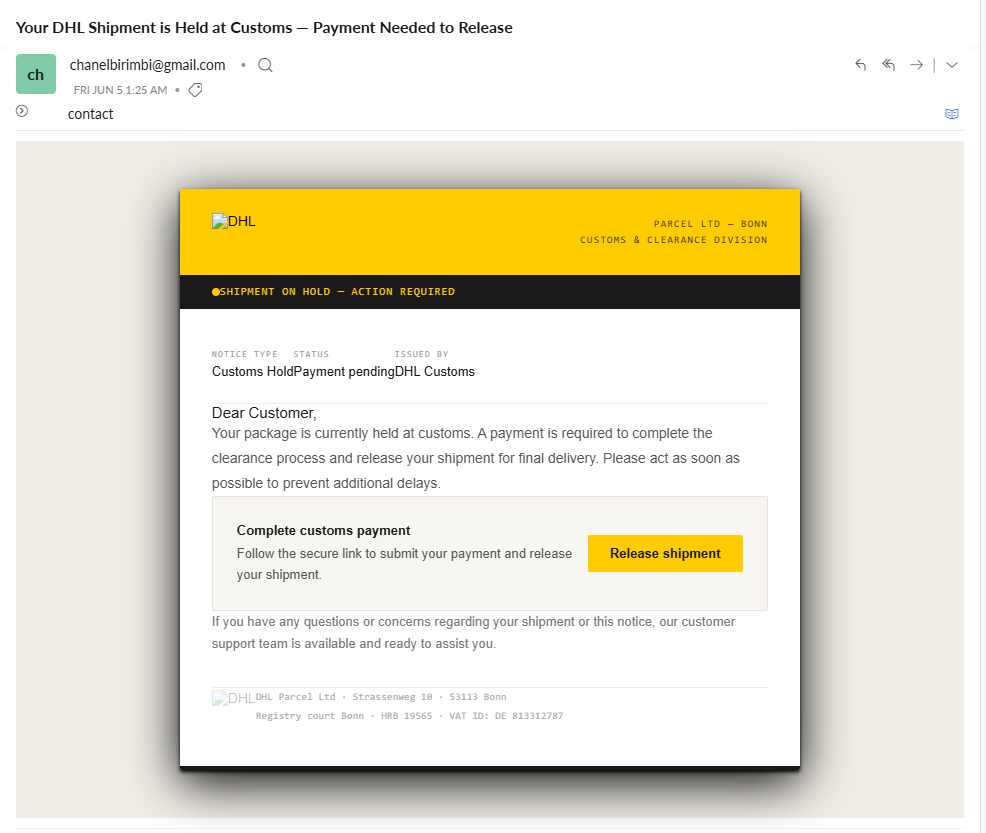
The email claims that a DHL shipment is being held at customs and asks the recipient to make a payment to release the parcel. At first glance, it may look like a real DHL customs notice, but several signs show that this is a phishing email.
Table of Contents
What the Fake DHL Email Says
The email says that the package is currently held at customs and that payment is required to complete the clearance process. It also includes a button labeled:
“Release shipment”
This button is designed to make users click quickly and submit payment or login information on a fake website.
The email uses DHL-style branding, yellow and black colors, and professional wording to make the message look trustworthy. However, the sender address and structure of the email clearly raise suspicion.
Why This Email Is Suspicious
The sender email shown in the screenshot is:
This is a major red flag.
A real DHL customs or shipment email should not come from a random Gmail address. Official DHL emails normally come from verified DHL domains, not personal email accounts.
Even if the design looks professional, the sender address is one of the most important things to check.
Common Signs of a DHL Phishing Email
Fake DHL phishing emails often include:
- A message saying your shipment is held at customs
- A request for customs fee or delivery payment
- A button like “Release shipment” or “Pay now”
- Urgent language to make you act fast
- A sender email from Gmail, Outlook, or an unrelated domain
- Broken logos or suspicious formatting
- Links that do not go to the official DHL website
Scammers use urgency because they want you to click before you think.
What Happens If You Click the Link?
If you click the fake payment link, it may take you to a phishing website that looks like DHL. The website may ask for:
- Your name
- Address
- Phone number
- Email address
- Card details
- Payment information
- Login credentials
Once you enter this information, scammers may use it for fraud, identity theft, unauthorized payments, or further phishing attempts.
How to Check If a DHL Email Is Real
Before clicking any DHL email link, follow these steps:
- Check the sender email address carefully
- Look for spelling or formatting mistakes
- Do not trust urgent payment requests blindly
- Hover over the button or link to preview the destination URL
- Visit the official DHL website manually from your browser
- Track your shipment using the official tracking number
- Contact DHL support if you are unsure
Never enter payment information through a link from a suspicious email.
What Should You Do If You Receive This Email?
If you receive a suspicious DHL customs payment email:
- Do not click the “Release shipment” button
- Do not reply to the email
- Do not download any attachment
- Mark the email as spam or phishing
- Delete it from your inbox
- Warn others if they may receive similar emails
If you already clicked the link and entered payment details, contact your bank immediately and change any affected passwords.
DHL Customs Payment Scam: Why It Works
This scam works because many people are used to online shopping and international deliveries. When someone sees a message saying their parcel is stuck at customs, they may panic and pay quickly.
Scammers take advantage of this fear by using familiar courier names like DHL, FedEx, UPS, and others.
That is why users should always verify shipment-related emails before taking action.
Final Words
A professional-looking email does not always mean it is real. Scammers can copy logos, colors, and email layouts, but they often fail to hide suspicious sender addresses and fake links.
The DHL email shown here is a strong example of a phishing attempt. The sender address is not official, and the email tries to push the user into making a quick payment.
Always remember:
Do not click courier payment links from suspicious emails. Verify first, pay later.
Stay alert and protect your personal and financial information.



0 Comments